

Why Choose Prefabricated Steel Houses?
Speed, strength, design freedom and predictable cost — the practical reasons steel-framed prefabricated homes are replac…
Read articlePractical insight from the factory, the drawing board and the site.
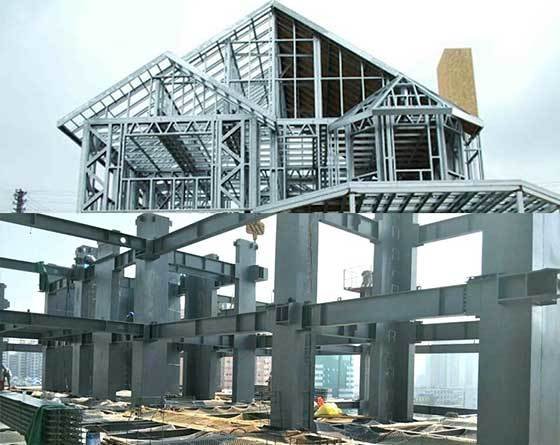
The terms “light steel” and “heavy steel” describe different structural systems, not simply the thickness of a member. Choosing the right one depends on span, height, loading and the way the building will be used.
Light-gauge steel frames use thin, cold-formed sections. They are ideal for low-rise houses, internal partitions, roof structures and modular units where loads are modest and speed matters.
They are lightweight, easy to transport and quick to assemble, but they are not usually the best choice for long spans or heavy floor loads.
Heavy steel uses hot-rolled beams and columns designed for larger spans, multi-storey buildings, industrial sheds and commercial spaces. The frame can carry significant loads and accept future modifications.
Heavy steel requires more engineering, heavier lifting equipment and more welding or bolting on site, but it delivers strength and design freedom.
Start with the building use, span, number of storeys and local code. A structural engineer can compare both options on cost, programme and performance. Many projects combine the two: a heavy steel primary frame with light-gauge secondary framing and partitions.
More guidance from the same part of the journal.
 07Oct 2026
Speed, strength, design freedom and predictable cost — the practical reasons steel-framed prefabricated homes are replac…
Read article
Comments (0)
Join the conversation. Comments are reviewed before they appear.
No comments yet — be the first to share your thoughts.